
Gabriel García Márquez
1927-2014
Literary Movement: Latin American Boom
Primary Genre: Realistic Story

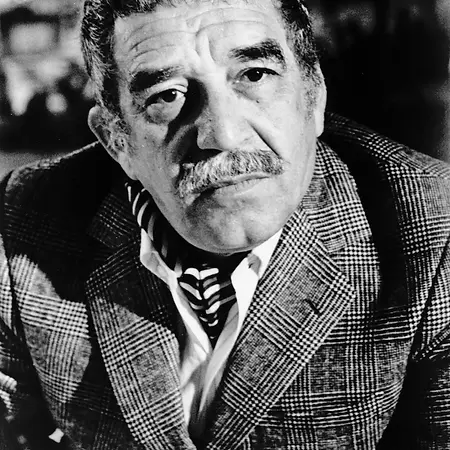
Raised in rural Columbia by his grandparents, García Márquez and his writing style were heavily influenced by the stories his grandfather related to him as a child. He lived in Paris for a while, continuing his education in the city as he learned both English and French. Then, he would live in Mexico City, where he would write the book that would bring him fame.
Cien años de soledad was a digestible yet complex magical realist novel following the story of a Latin American town called Macondo. This book, along with many others García Márquez contributed to the genre, led to his winning of the Nobel Prize for Literature in 1982. During his address in relation to this honor, García Marquez touched on the detrimental role that colonial overreach has played on the development of Latin America and the need for social change across many parts of the Spanish-speaking world.
After winning the award, García Marquez continued to write, producing a piece titled El amor en los tiempos del cólera. Some characteristics of García Marquez's writing are the prevalent role that irony plays, as well as fantasy and tragedy. Later in life, García Márquez developed a friendship with Cuban dictator Fidel Castro. In fact, Castro even gifted García Márquez a mansion. All in all, García Marquez will be recognized as one of the great Latin American authors, his contributions to magic realism rival to those of even Jorge Luis Borges.
Connection with Art

La Merced, Gustavo Montoya, 1985, Mexico.