
Carlos Fuentes
1928-2012
Literary Movement: Latin American Boom
Primary Genre: Magical Realism

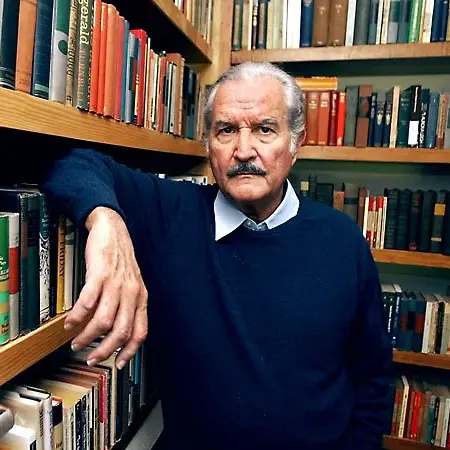
Carlos Fuentes was born in Panama. His father was a Mexican diplomat, a career that Fuentes would later pursue when serving as the Mexican ambassador to France from 1975 to 1977. After traveling a lot for his father's work, Carlos settled in Washington, D.C., where he learned English at four.
After some time assimilating to American culture and facing ridicule from his peers, as well as in response to his family's conservative values, Fuentes joined the counterculture and actually became a Marxist. This was around the time Fuentes was studying law at the University of Mexico. He also developed an affinity for social justice. These values were reflected in a lot of his early works, such as Los días enmascarados and La región más transparente.
These themes manifested themselves in Fuentes' trademark magical realist style, a genre seen widely across Latin American literature but something Fuentes played with in a unique way. The piece that really propelled Fuentes onto the world stage, however, was a novella titled La muerte de Artemio Cruz. After this success, Fuentes began focusing his work on short stories; he also experimented with plays and nonfiction.
Though Fuentes would continue traveling, he was always drawn back to the vibrancy of his Mexican roots. This calling was yet another topic Fuentes delved into through his writing, exploring the ways in which external influences have impacted Mexican culture. Once his output slowed, Fuentes was at last awarded the Cervantes Prize, recognizing him for his significant contributions to Hispanic literature.
Connection with Art

Maya chacmool from Chichen Itza, now displayed at the National Museum of Anthropology in Mexico City.